Although the invitation indicated 7pm, the party is only in full swing at 10, when the cocktails start flowing. Although I myself am only drinking water with an orange slice, I do attack the chilli chicken tikkas, which I simply cannot resist.
Peggy introduces me to people I don’t know (yet), and the now oh-so-familiar, sceptical question is asked: ‘Do you like spicy food?,’ assuming that most expats can’t handle Indian-level spiciness. I nod, about to take another chicken tikka from the waiter passing by. What they don’t know is that my grandmother was Indonesian, and I grew up with red chillies. When I was six, I explain to the questioner, she taught me how to make sambal, and during my first attempt, despite my grandma’s warnings, I was stupid enough to lick my fingers, which were smeared with finely ground red chillies. Since that first lesson, I have had a love affair with chillies — I even add it on pizza.
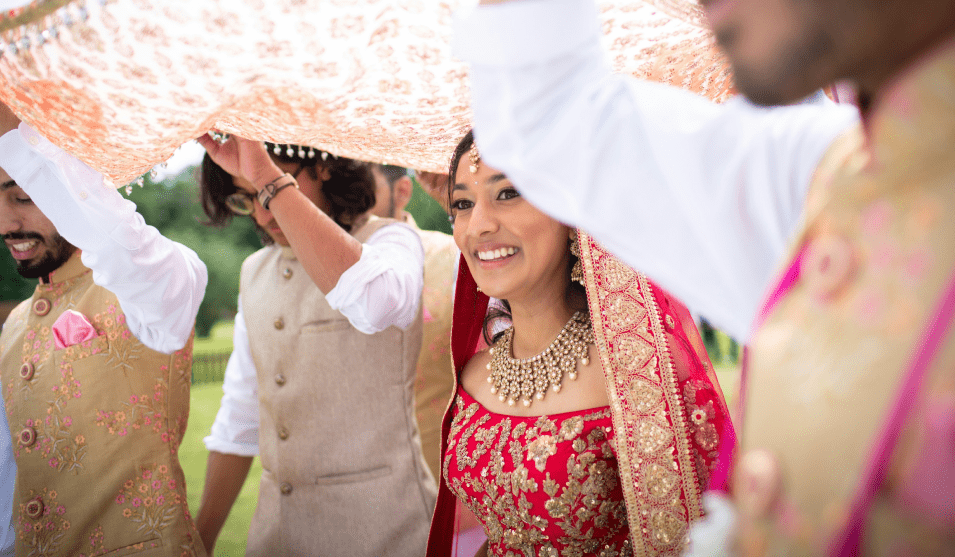
A younger woman wearing a gorgeous, pale green ready-made sari leaned over and, trying to whisper — despite the loud music— as if to reassure me: ‘I bought the exact same sari you are wearing today,’ winking at me meaningfully. Was she suggesting that foreigners do not normally make good fashion choices, or was she really trying to compliment me as she would a friend or Indian acquaintance?
The interview
Then comes another familiar question: ‘Is this your first Diwali?’
‘No,’ I reply, ‘I celebrate it every year. With all the frills: doing the pooja2, and my kids love to do rangoli3.’
This makes quite an impression on the questioners, who look rather surprised and impressed.
The group with whom I am having a drink discusses my sari in Hindi, remarking on how well I wear it. They seem to have switched to their local language automatically, but they immediately apologised and switched back to English, not knowing that I in fact understood every word.
This is so nice about Indian culture: in a similar circumstance in the Netherlands, you may often feel excluded from a social circle of which you are not already a member, but here, on the contrary, you immediately feel more than welcome.
More questions follow, and the conversation takes on the flavour of an interview: Am I inconvenienced when they often switch into Hindi? Is this my first time having Mehendi4 done? What do I think of Indian culture? Does my daughter like wearing the lehenga?
Somehow it is disappointing
While I appreciate their interest immensely, somehow it is disappointing. I have tried incredibly hard to integrate culturally over the past 13 years: my daughters grew up here and attended an Indian school; I learnt the local customs and language; I learned to love the food, do the prayers and the fasting…but I will always be somewhat on the outside. These questions can be well-intentioned — these kind party guests were not trying to make me feel like an outsider, and I could even interpret their questions as appreciation for the effort I have made.
Therefore, I answer every question patiently and without rancour, waiting for the question that is always the last to be asked:
‘When did you come to India?’
I pretend I have to think for a moment and then answer somewhat euphorically:
‘This will be my fourteenth year.’
1Lehenga is a long, often floor-length skirt decorated with embroidery, mirrors, beads or gold banding. The woman often pairs it with a short top that leaves the belly often a large part of the back exposed.
2Lakshmi Puja is a prayer ritual in which the family gathers to invite Goddess Lakshmi into the home so that the new year is filled with peace, wealth and prosperity.
3Diwali is celebrated mainly to herald the arrival of Goddess Lakshmi. Rangoli is an art form in which Indian patterns are created on the floor most of the time at the entrance of the house with different colours of powder and candles that not only to welcome the guests who come to visit but also the Goddess herself.
4Mehendi is Henna decorations applied to women’s hands as a sign of femininity and beauty that represents good luck and prosperity.




2 Responses
aahhh……reading this, I just realise how many times I’d have made my friends from outside the country feel unwelcomed (unintentionally, ofc).
Indians often have a tendency to gatekeep parts of their cultural identities, perhaps a paradigm of colonial hangover. What we don’t realise is that for a culture to perfectly immerse itself with the world, it has to let the world experience it first…in all its forms
Then again, as long as we push to be better…
Much Love!
Thank you for you comment! Please know that I have no judgment at all. I don’t think any culture is “better” or “more welcoming” than another. We all have our own habits for showing interest, and sometimes those habits are shown differently than we intend.
Indians usually mean incredibly well. (THEY REALLY DO!!!) Those repeat-questions are – in my opinion – just a way to connection. It’s already much warmer than how my own culture (Dutch) would approach NewB’s from abroad :). Every culture has its own version of the script.
What matters is exactly what you wrote: noticing, reflecting, and wanting to do better. That’s already more than most people ever do.
Much love back!